Fanblock:↳ multi-tenantWeb3
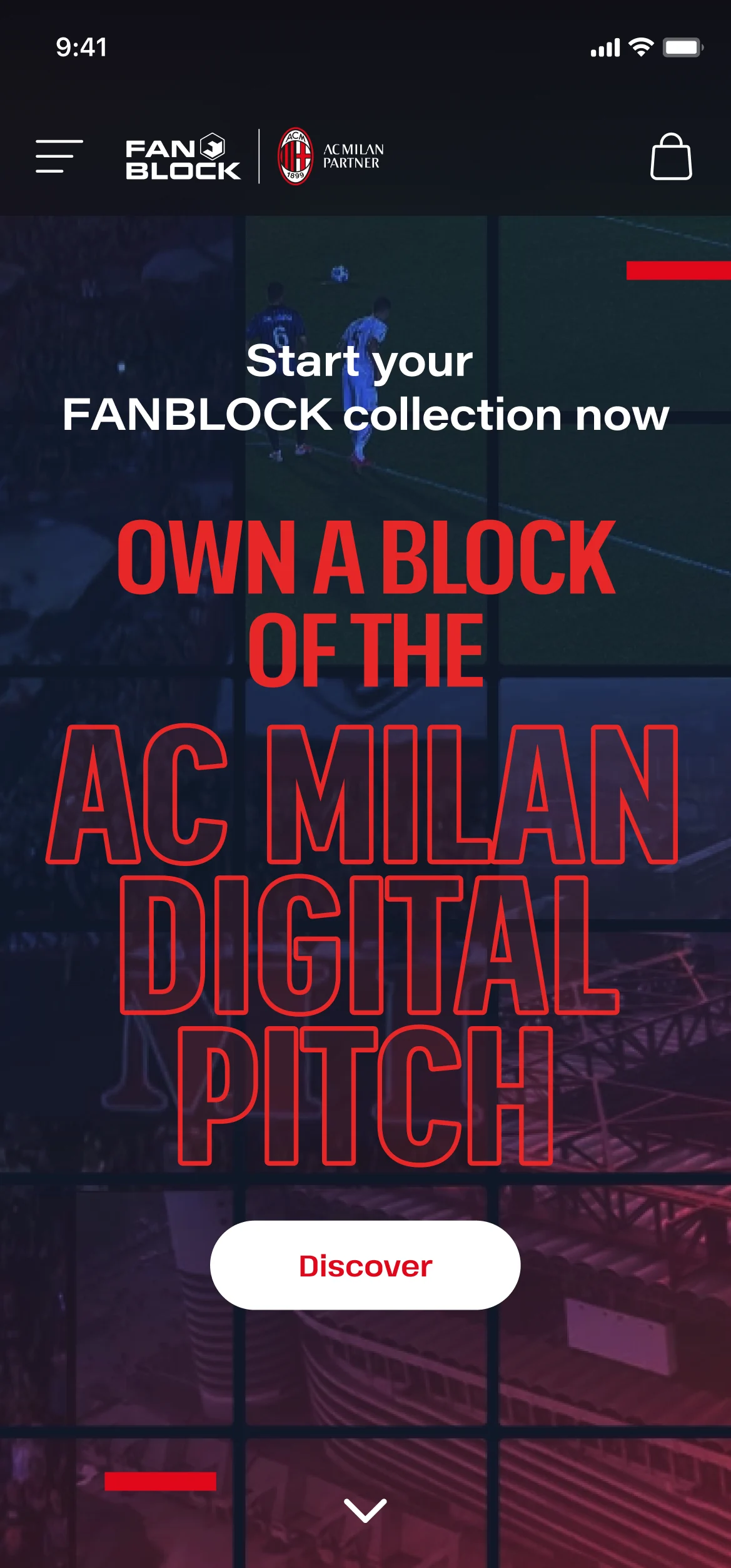
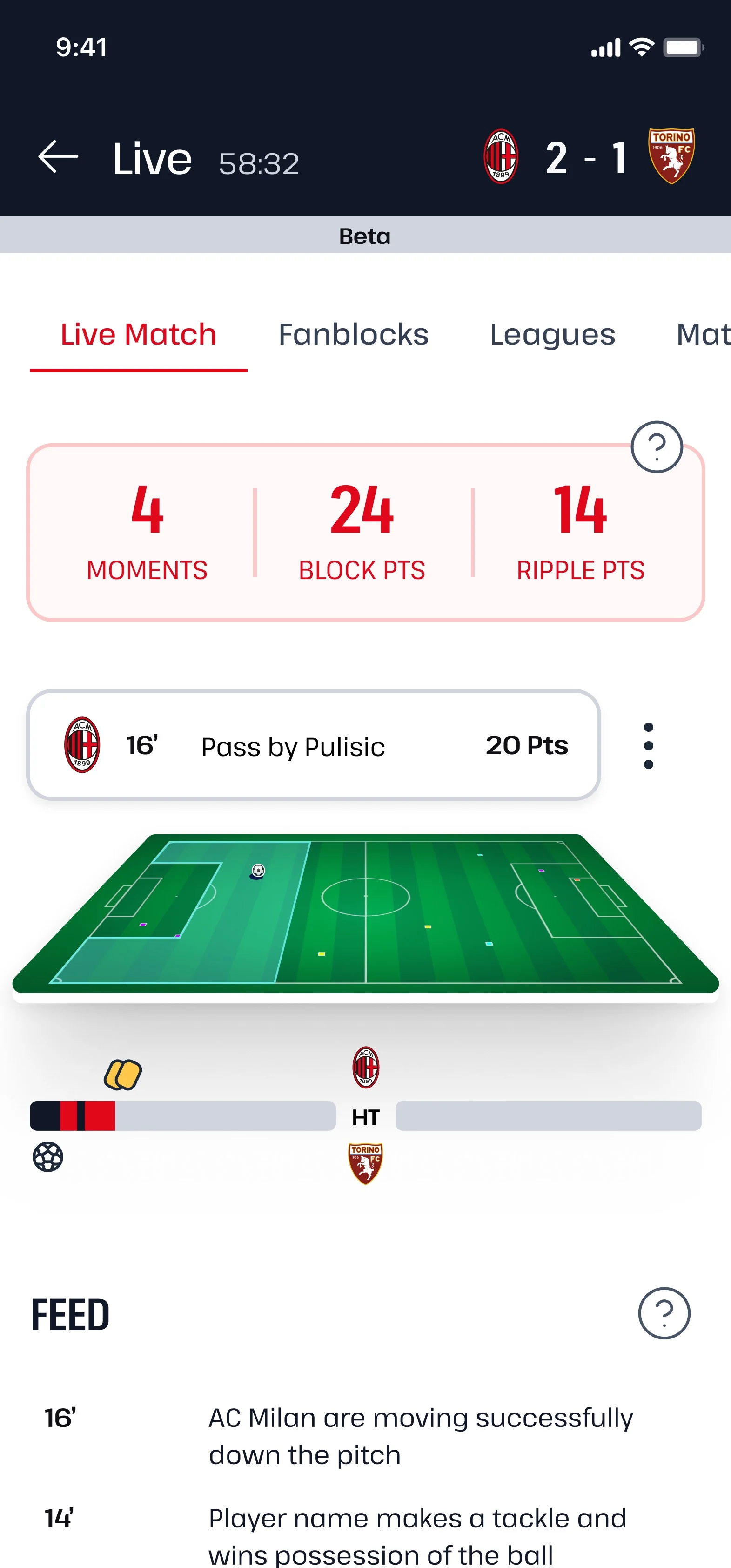
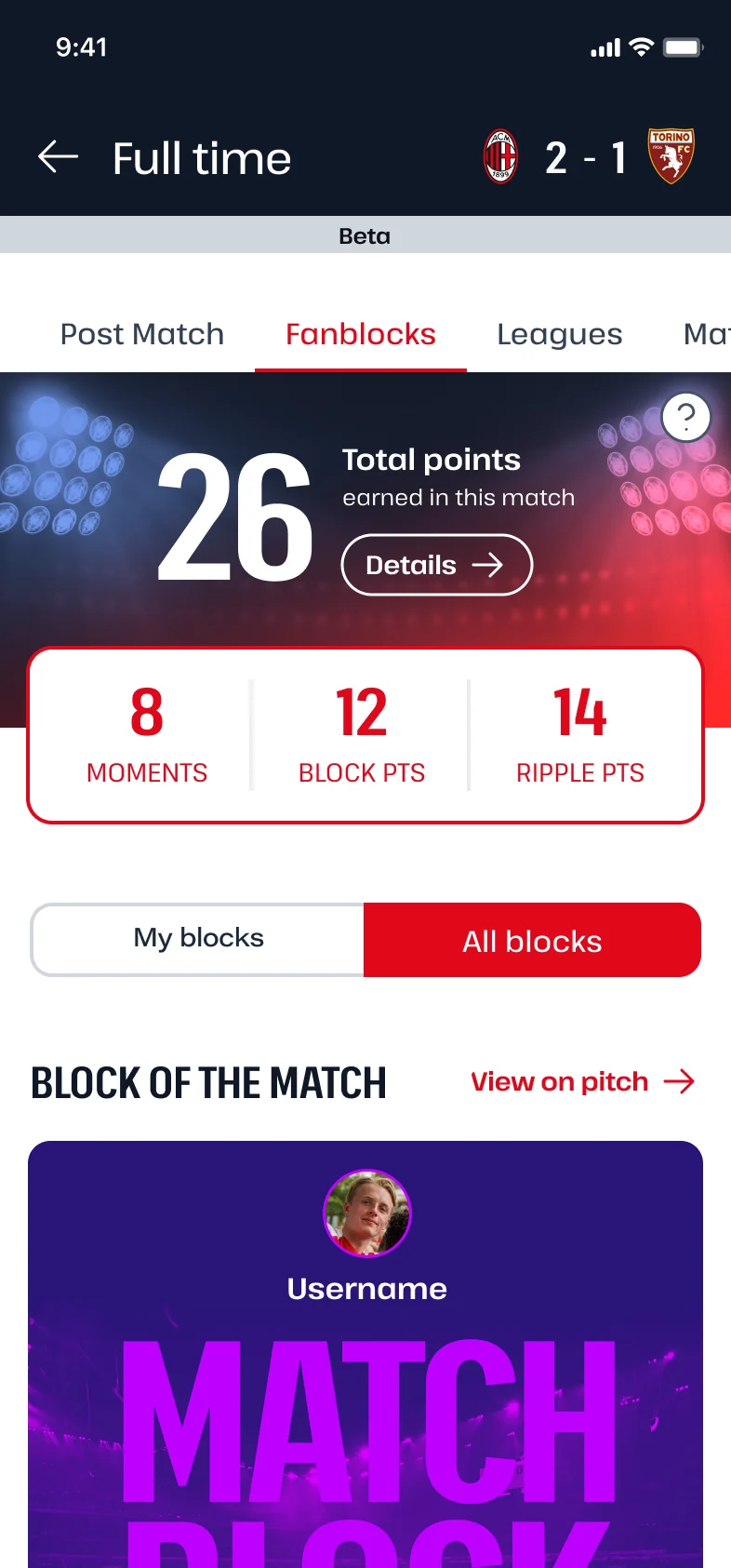
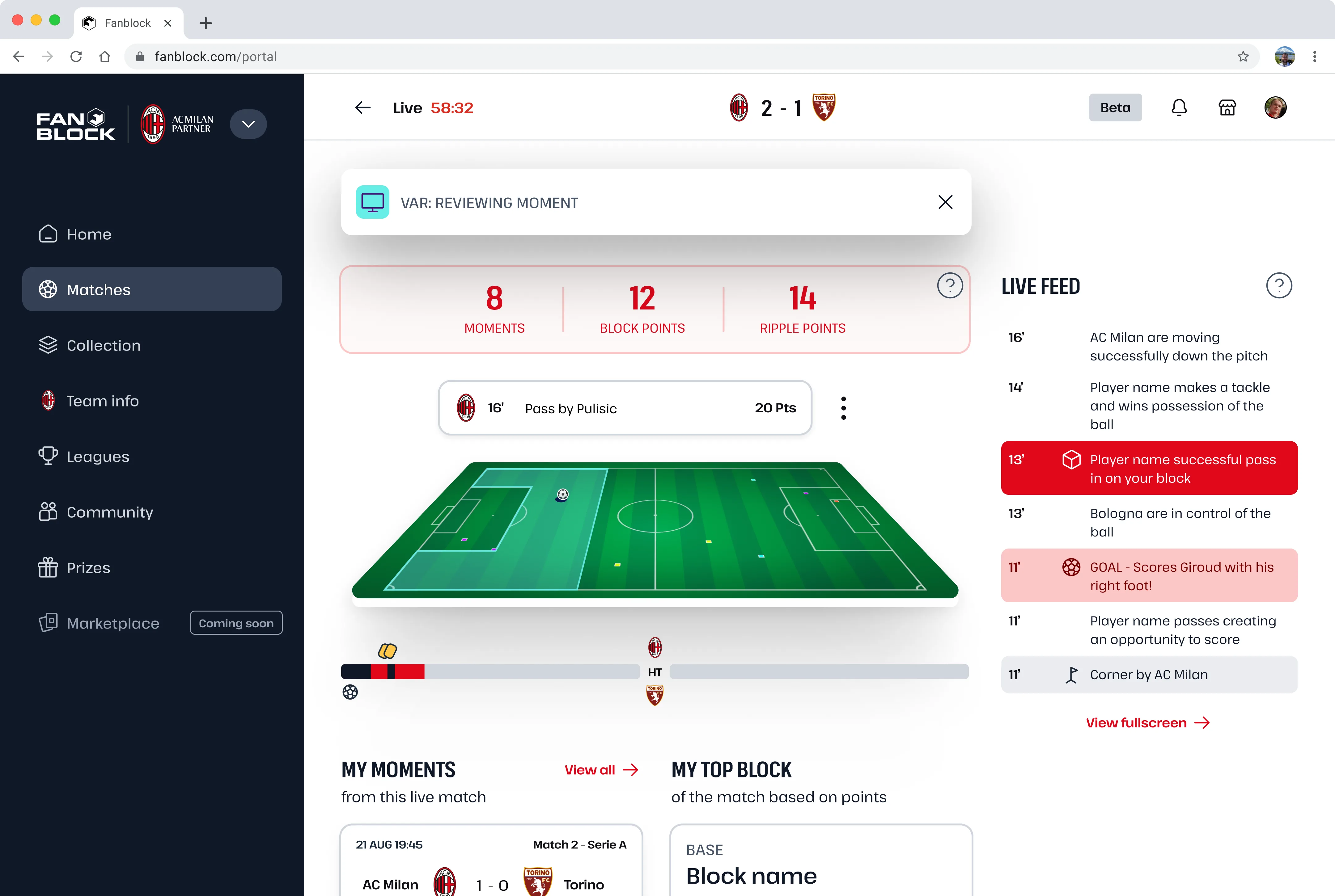
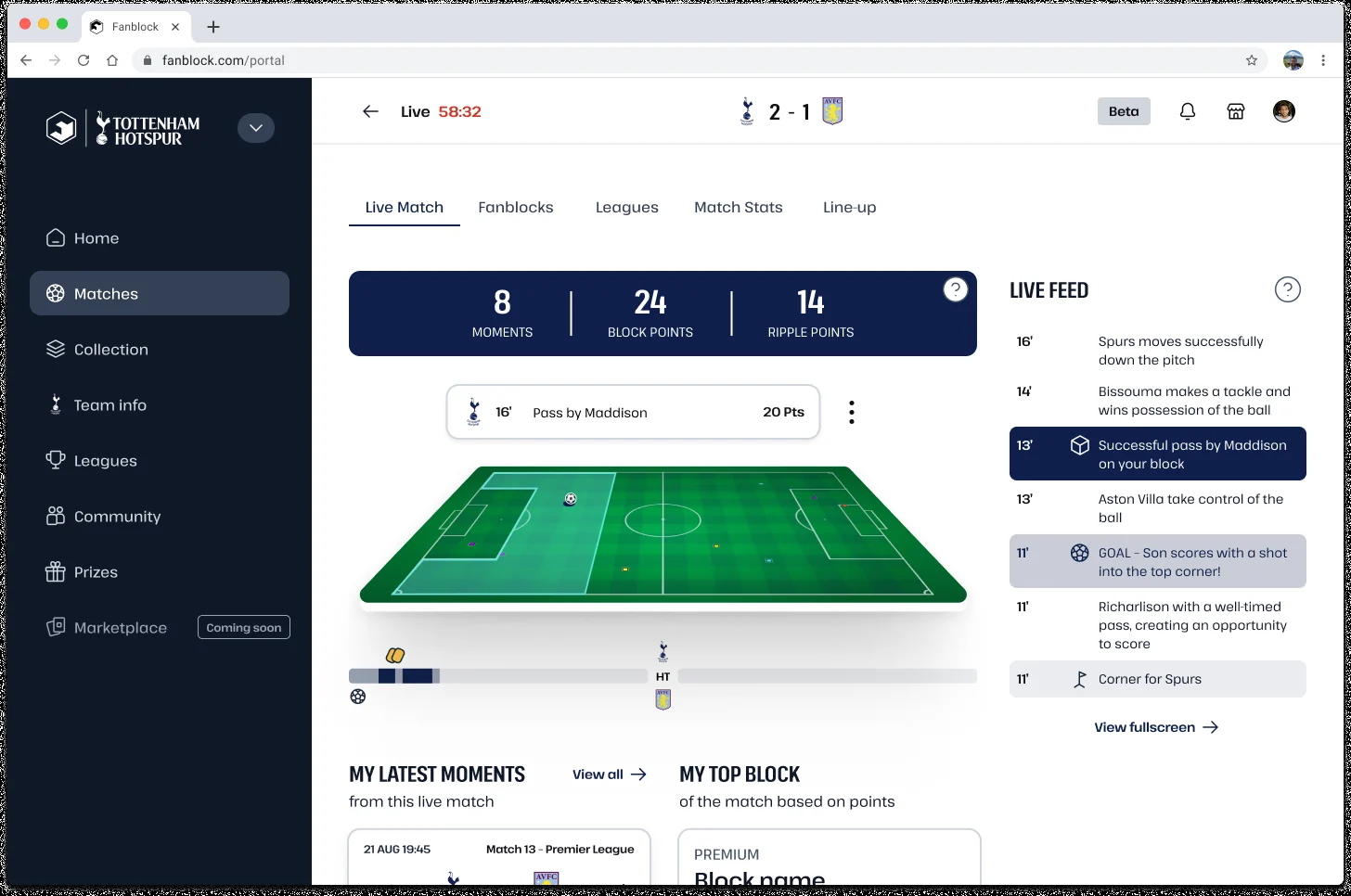
A 0-to-1 product design lead role securing $1M+ in additional seed funding and architecting a scalable, multi-tenant web3 sports platform, launching the initial AC Milan beta in exactly 120 days from the first line of code, followed by Tottenham Hotspur.
Back to Work// 01
Overview
Joining Fanblock as the initial design resource meant establishing the product from a conceptual pitch deck into a live platform. The mandate was to drive the 0-to-1 lifecycle across three core phases:
Directing the strategic prototype required to secure a crucial $1M+ seed funding injection.
Recruiting and establishing workflows for a distributed design team of over 10 people.
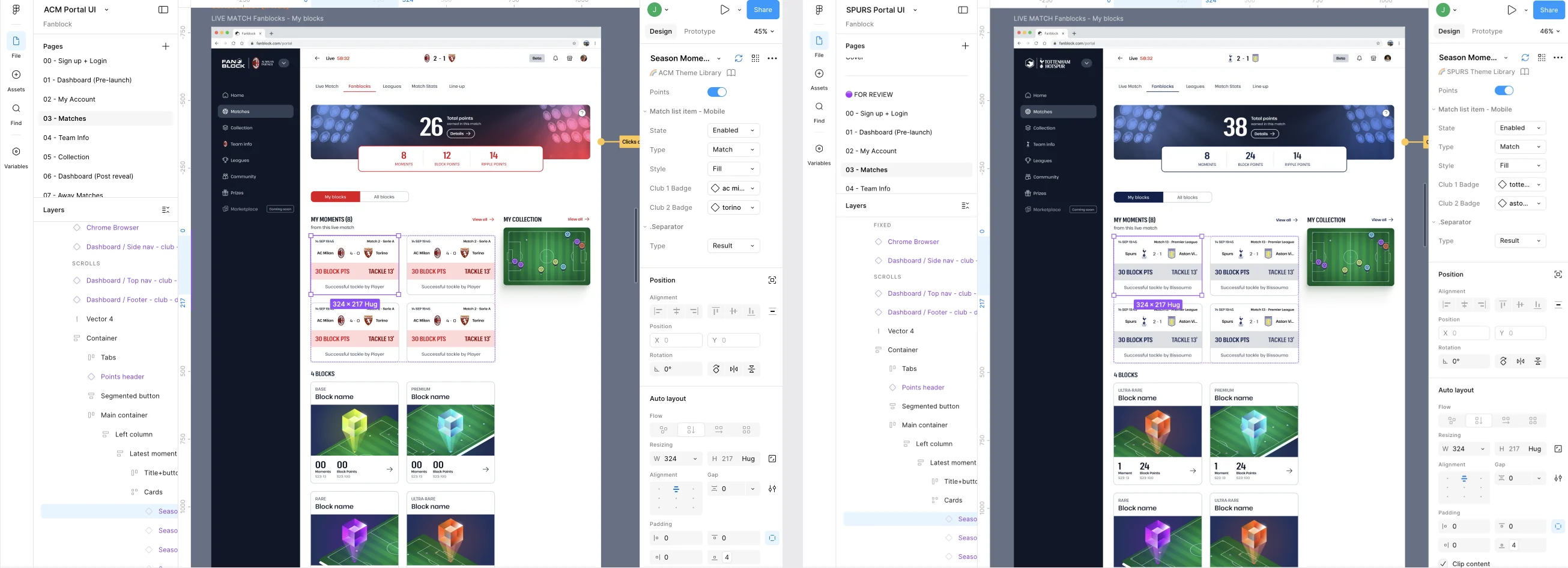
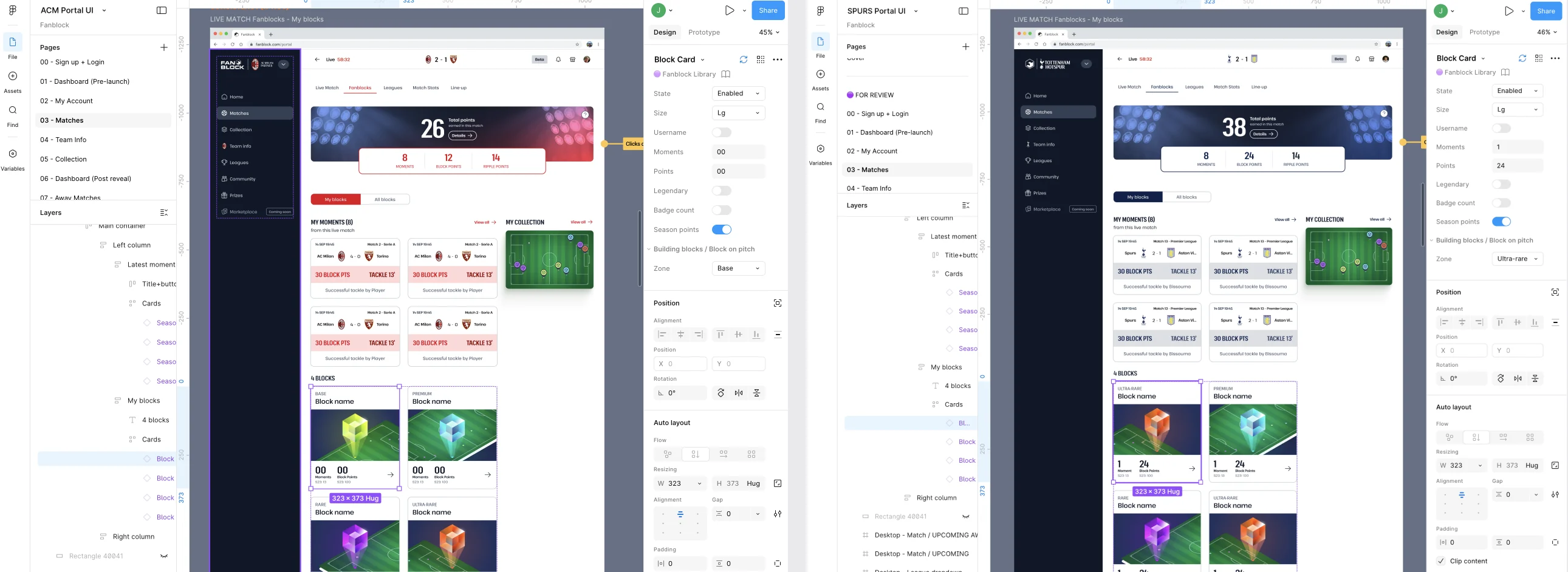
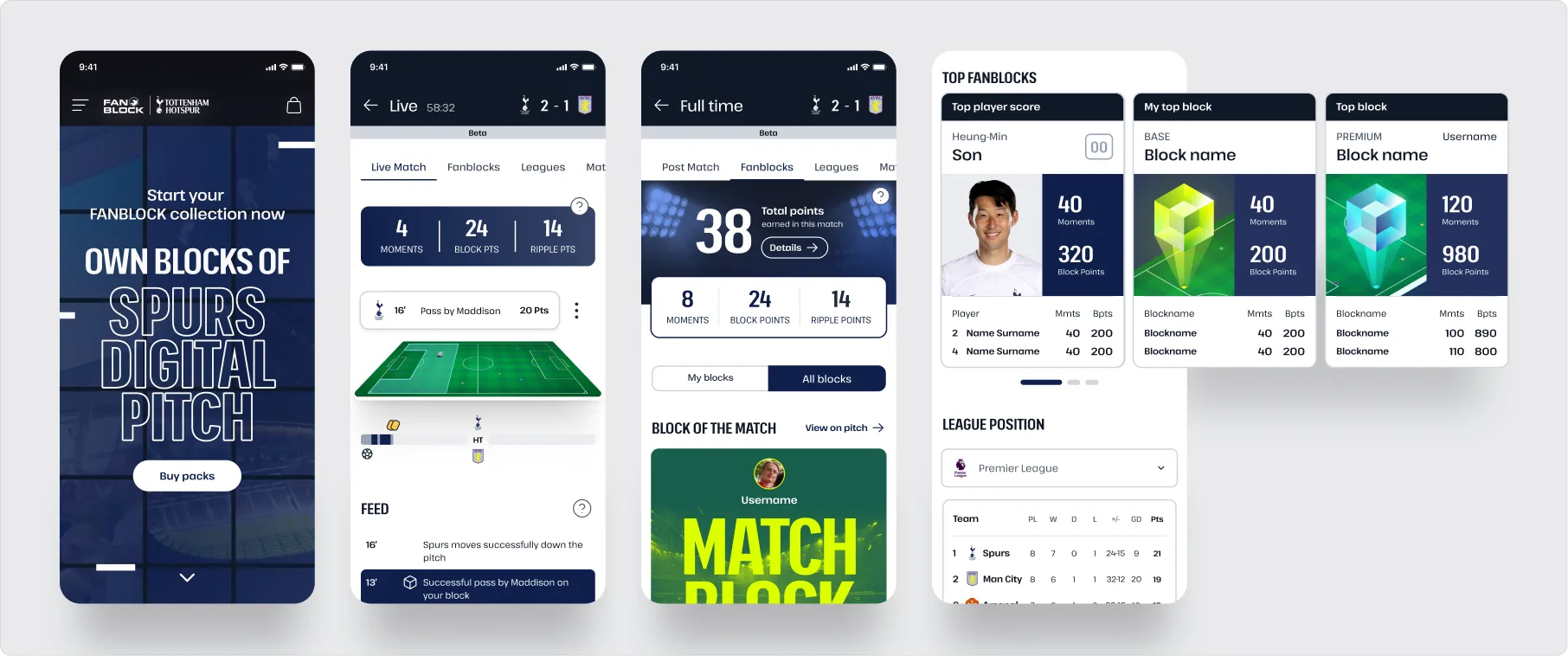
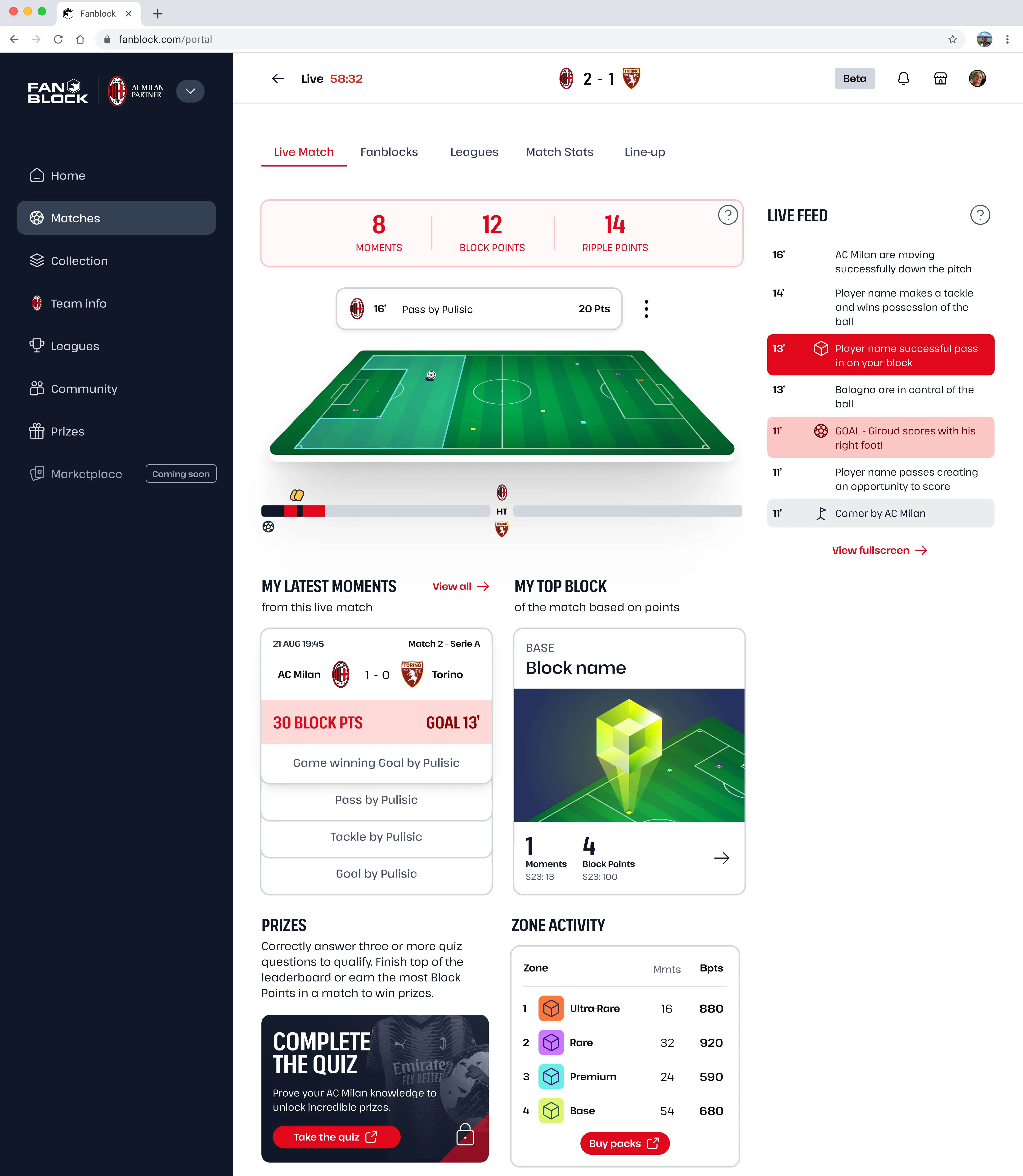
Architecting the multi-tenant system that successfully launched AC Milan and subsequently Tottenham Hotspur on the exact same core product infrastructure.
// 02
Challenge
The timeline demanded a launch with AC Milan in just 120 days once development began. At the project's inception, there was no branding, no UI, and no shared mental model. Three constraints defined the operational reality:
The Execution Gap
While some initial funding existed and a backend development team had been selected, no code had actually been written. The executive team was caught in abstract brainstorming cycles, stalling critical downstream decisions. A significant injection of capital was required to unblock the build phase and move from concept to execution.
The Scale Constraint
The product required a flexible foundation to launch for multiple football clubs with distinct brand identities. This had to be achieved without a total platform rebuild for each tenant, and notably, without the budget for an Enterprise Figma license.
The Commercial Pressure
Club-mandated deadlines, founder-driven pricing assumptions, and a distributed team across three time zones meant every design decision carried immediate commercial and operational weight.
// 03
Process
The immediate priority was capital injection, not deep UI validation. To unblock the business, the traditional discovery phase was bypassed. Partnering with my design intern, Jess, we built a high-fidelity strategic prototype in under five days.
A polished North Star prototype was strategically utilised to secure investment faster than standard wireframes.
This approach traded deep persona validation for speed to funding, a UX debt planned for repayment once the development team commenced work.
The prototype successfully secured over $1M in additional seed funding before a single line of code was written. Once secured, this initiated the strict 120-day countdown to the AC Milan launch.
The Pricing Pivot
With funding secure, lean guerrilla research was conducted to stress-test the core value proposition. The user data surfaced a direct conflict with the initial business model.
The initial pitch to investors relied on an "Elite Luxury" high-ticket sales model.
User testing clearly indicated the entry point was too high, threatening engagement regardless of the club's brand strength.
Presenting this data prompted a structural pivot toward an "Accessible Gaming" model, introducing multiple tiers and lower entry points to ensure a viable user base.
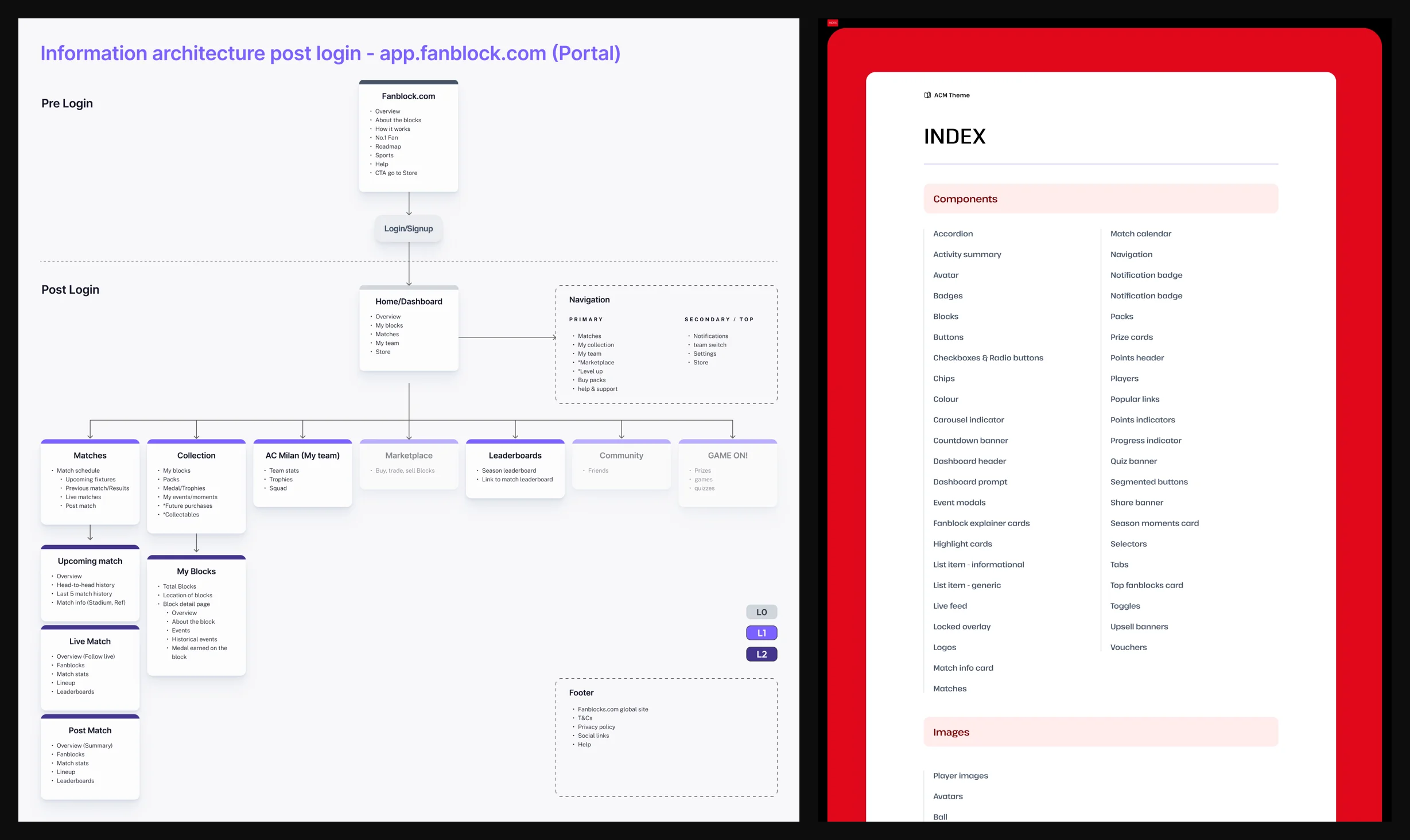
Following team assembly, the focus shifted to architectural oversight. This included driving the broader product architecture, providing strategic blueprints for the UX Lead, and managing an external research agency to stress-test the AC Milan launch culturally and linguistically.
// 04
Design decisions & rationale
The Definition of Done
Managing a distributed team required a unified technical language. The company's first rigid Definition of Done was established to eliminate systemic drift. It mandated multi-state components, responsive specs, full token mapping to the master library, designed edge cases, and engineering walkthroughs prior to any handoff.
Strategic Compliance
Live match-day deadlines were strictly non-negotiable. When delivery speed superseded UX depth, a framework of "strategic compliance" was applied: meeting the immediate commercial requirement while rigorously documenting the architectural debt and the V2 correction path. This ensured absolute transparency regarding what was shipped and the systemic trade-offs involved.
// 05
Outcome
Within exactly 120 days of the first line of code being written, the AC Milan beta launched on a scalable, tokenised multi-tenant platform.
Following this initial deployment, Tottenham Hotspur was integrated seamlessly on the same system at just 65% of the original build cost.
The seed round secured an additional $1M+, driven entirely by a rapid-turnaround prototype.
The operational firewall, comprising the Definition of Done and child library architecture, enabled a distributed team to execute at high velocity while maintaining structural integrity.
// 06
Reflection
Fanblock demonstrated that early-stage product design requires accurately identifying the immediate business need and adapting structural systems to meet it.
Presenting data that directly conflicts with founder assumptions is challenging but vital for product survival. A key operational takeaway was that structural governance cannot wait. While early sprint pressure made establishing child libraries and strict definitions feel secondary, establishing a shared systems language immediately ultimately saves the capital required to correct architectural drift later.
// 07
Client Feedback
Jennifer Hull stands out as an exceptional UX management professional, distinguished by her problem-solving abilities and unyielding commitment to improving the user experience. Her track record is marked by her ability to navigate complex challenges and her friendly orchestration of team dynamics within agile, high-pressure environments.
She is proficient in understanding and articulating design concepts and the intricate needs and expectations of stakeholders. Jennifer's expertise allows her to seamlessly integrate user experience strategies with broader business objectives, showcasing her ability to think both creatively and strategically.
In our fast-paced startup, Jennifer's approach to UX research was both meticulous and agile. She excels at organising and conducting research that is not only structured but also yielded solid insights and practical solutions under tight deadlines.
Working closely with Jennifer on a daily basis showed me her exceptional capabilities in both UX management and research. Her design skills are evident — as well as her strategic thinking, innovative problem-solving, and expert use of tools like Figma to craft detailed design solutions.
Chief Product Officer, UltraFan.io